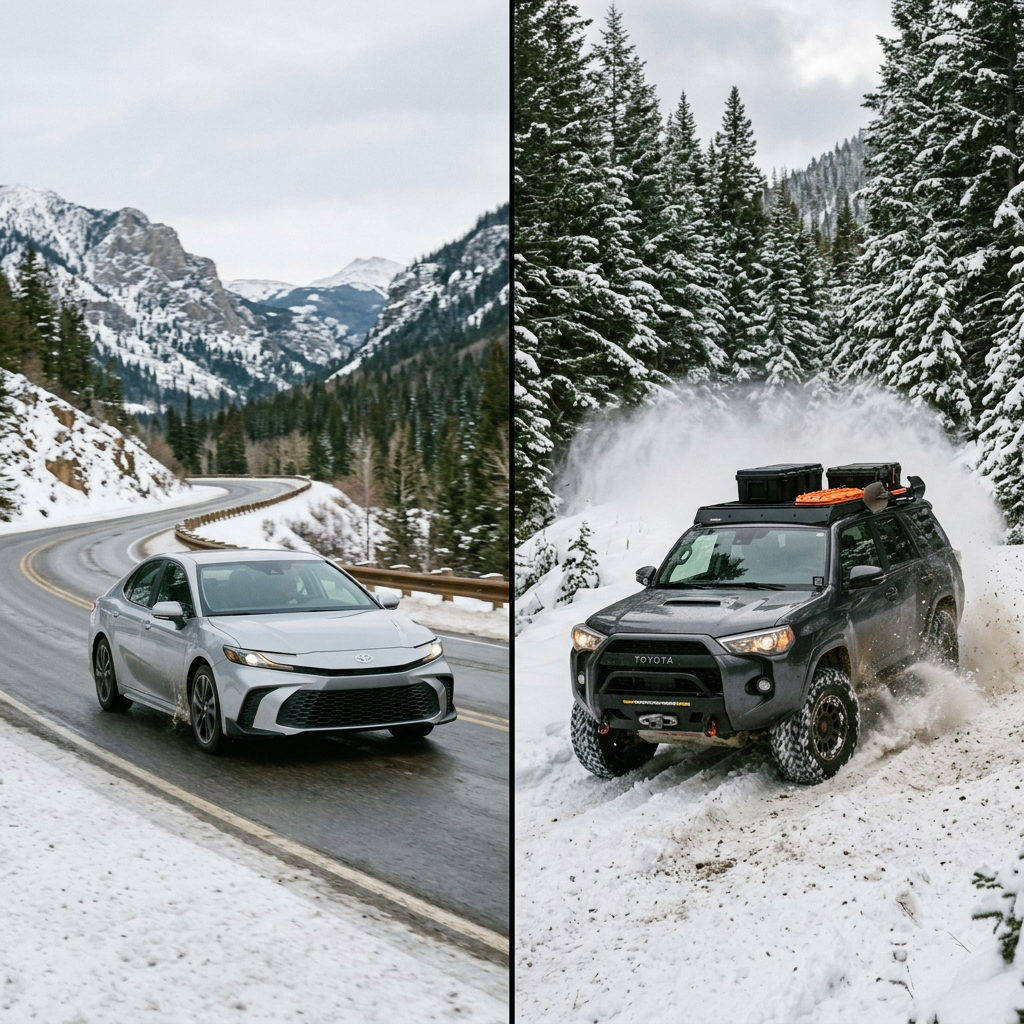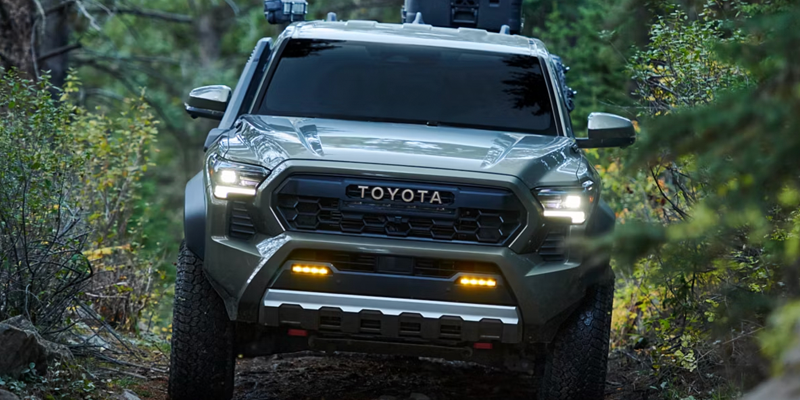

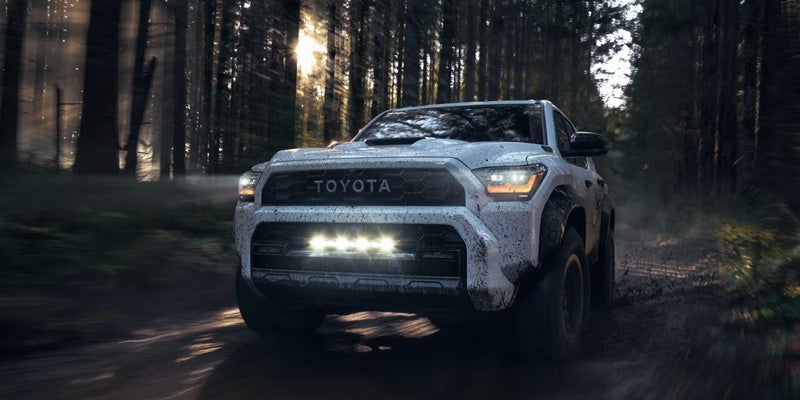
The 2026 Toyota 4Runner TRD Pro delivers extreme off-road capability out of the box, engineered with a standard i-FORCE MAX 2.4-liter turbocharged hybrid powertrain producing 326 hp and 465 lb-ft of torque, an electronically controlled locking rear differential, FOX 2.5-inch QS3 internal bypass shocks, and an active Stabilizer Disconnect Mechanism. Built for Wyoming’s toughest trails, this flagship adventure SUV clears severe obstacles with a 32-degree approach angle and comprehensive factory underbody armor. Whether navigating technical rocky inclines near Thermopolis or handling deep ruts along mountain passes, the 6th-generation 4Runner TRD Pro provides high-level trail confidence. Power flows through an 8-speed automatic transmission to a part-time 4WD system with an electronically controlled two-speed transfer case. Low-range gear reduction multiplies low-end electric torque, giving drivers refined throttle modulation over loose gravel, mud, and steep granite shelves. Every structural element of the TRD Pro caters to rugged utility without compromising long-distance comfort. Heavy-duty underbody skid plates shield crucial drivetrain components from impact, while factory-installed front and rear recovery points offer secure anchor locations when assisting other trail rigs. To experience this legendary engineering in person, local drivers can reach out to our team at (307) 335-3106 or drop a pin to our Lander showroom location for personalized model details. Table of Contents What Key Off-Road Hardware and Suspension Features Equip the 2026 4Runner TRD Pro? How Much Horsepower and Torque Does the i-FORCE MAX Hybrid Powertrain Produce? How Does Multi-Terrain Select (MTS) Function in Low-Range 4WD? Is the TRD Pro Worth the Extra Money Versus Lower 4Runner Trims? What Should You Check After Off-Roading Your 4Runner? Common Questions About the 2026 Toyota 4Runner TRD Pro How to Check 2026 4Runner TRD Pro Availability Near You What Key Off-Road Hardware and Suspension Features Equip the 2026 4Runner TRD Pro? The 2026 Toyota 4Runner TRD Pro comes factory-equipped with FOX 2.5-inch QS3 internal bypass shocks featuring piggyback rear remote reservoirs, an electronic Stabilizer Disconnect Mechanism, 33-inch Toyo all-terrain tires wrapped around 18-inch matte-black alloy wheels, and an electronically controlled locking rear differential. When buyers walk around the showroom floor comparing 4Runner models, they usually check the quick-adjust dials on the FOX shocks before exploring interior features. The QS3 dampers allow drivers to manually adjust compression damping across three distinct settings, adapting vehicle dynamics on the fly from smooth highway cruising to high-speed dirt running or slow-speed rock crawling. The front suspension benefits directly from Toyota’s Stabilizer Disconnect Mechanism. At the push of a dash-mounted button, the front sway bar electronically disengages to unlock massive suspension articulation, keeping tires firmly grounded over uneven boulders and cross-axle terrain. Combined with a 32-degree approach angle and dedicated steel skid plates, the vehicle easily navigates rutted agricultural tracks around Worland. To explore current availability or arrange a hands-on walkaround, explore our new Toyota inventory online or contact our team about scheduling a pre-owned vehicle test drive today. How Much Horsepower and Torque Does the i-FORCE MAX Hybrid Powertrain Produce? With a combined output of 326 hp and 465 lb-ft of torque, the 2026 4Runner TRD Pro's hybrid powertrain blends a turbocharged four-cylinder engine and a 48-hp electric motor for impressive performance. This hybrid setup delivers instant electric torque at low engine rpm, eliminating turbo lag when starting from a dead stop on steep inclines or climbing technical rock ledges. Fuel economy remains efficient for a hard-core off-roader, returning an EPA-estimated 23 mpg city / 24 mpg highway. Furthermore, the massive torque output enables a maximum towing capacity of 6,000 pounds, making it effortless to haul recreational trailers, fishing boats, or camper setups across the state. For long-term peace of mind, every vehicle purchased through our store includes extra ownership protection. Take a look at our selection of pre-owned models or learn more about our Fremont Care protection plan to see how we help preserve vehicle value over time. How Does Multi-Terrain Select (MTS) Function in Low-Range 4WD? Multi-Terrain Select acts as customizable traction control for tough roads, allowing the driver to select specific surface settings—such as Mud, Sand, Loose Rock, or Rock—to automatically adjust engine throttle response, wheel braking force, and traction control intervention in both 4WD High and 4WD Low. In low-range 4WD (4LO), the system works alongside Crawl Control, an off-road low-speed cruise control system that manages acceleration and braking so the driver can focus entirely on steering through tight obstacles. Complementing these systems is Downhill Assist Control, which maintains a controlled velocity when descending steep, loose dirt grades without locking up the brakes. Mud & Sand Mode: Allows controlled wheelspin to clear tire tread and maintain momentum through soft ground. Rock Mode: Minimizes wheelspin, applying individual wheel braking to transfer torque instantly to tires with traction. Loose Rock Mode: Smooths throttle delivery to prevent tire digging on gravel inclines. Maintaining proper component operation after heavy trail use requires genuine components. Owners can order replacement filters, fluids, and trail gear directly through our genuine Toyota parts department. Is the TRD Pro Worth the Extra Money Versus Lower 4Runner Trims? Compared to the TRD Off-Road trim, the 2026 4Runner TRD Pro offers exclusive features like IsoDynamic seats and unique exterior styling that elevate both comfort and presence. While the TRD Off-Road includes essential trail gear like Multi-Terrain Select and Crawl Control, it utilizes standard monotube shocks and a conventional gas engine unless upgraded. The TRD Pro elevates performance with standard hybrid power, upper control arm geometry optimized for lift, and specialized IsoDynamic performance seats that feature internal air-over-oil shock absorbers to dampen upper-body movement during rough high-speed trail driving. When compared against non-Toyota rivals, the 4Runner TRD Pro balances daily cabin comfort with hard-core specs. For instance, a standard Jeep Wrangler Rubicon offers up to 10.8 inches of standard ground clearance compared to about 10 inches on the 4Runner TRD Pro, yet the 4Runner provides significantly superior highway refinement, advanced driver safety via Toyota Safety Sense 3.0, and quiet cabin isolation. Shoppers interested in upgrading can evaluate their current vehicle's trade value using our quick online vehicle trade-in valuation tool before stopping by for a comparison walkaround. What Should You Check After Off-Roading Your 4Runner? Following a day on unpaved backcountry trails, drivers should perform a systematic post-trail inspection checking tire tread integrity, underbody armor mounting, shock absorber seals, and steering linkages for mud build-up or impact damage. Tires & Wheels: Inspect tread blocks and sidewalls for cuts, gouges, or embedded sharp stones. Verify tire pressures once tires return to highway temperatures. Underbody Skid Plates: Examine front and transfer case skid plates for loose mounting bolts, deep gouges, or accumulated mud that could affect engine cooling. Suspension & Shocks: Inspect the body and remote reservoirs of the FOX 2.5-inch QS3 internal bypass shocks for fluid weeping or physical denting. Brakes & Steering: Spray clean water around brake calipers and steering knuckles to wash out abrasive dirt and gravel. Staying on top of routine checks prevents minor trail scuffs from becoming costly repairs down the road. If you are preparing to finance your next adventure vehicle, completing our secure online credit application ahead of time streamlines the paperwork process in our finance office. Common Questions About the 2026 Toyota 4Runner TRD Pro Q: Does the 2026 4Runner TRD Pro come standard with the hybrid powertrain? Yes, the 2026 Toyota 4Runner TRD Pro features the i-FORCE MAX 2.4-liter turbocharged hybrid powertrain as standard equipment. This advanced setup produces 326 hp and 465 lb-ft of torque, sending power through an 8-speed automatic transmission to a part-time 4WD system. Q: What is the approach angle on the 2026 4Runner TRD Pro? The 2026 4Runner TRD Pro features a 32-degree approach angle. This steep clearance angle allows the front bumper to clear large rocks, ledges, and steep incline transitions without scraping or catching underbody components. Q: How does the Stabilizer Disconnect Mechanism improve trail performance? The Stabilizer Disconnect Mechanism electronically disengages the front sway bar at the press of a button. Disconnecting the sway bar increases front wheel articulation dramatically, allowing the front tires to drop into deep ruts or climb over boulders while keeping all four wheels planted firmly for maximum traction. Q: What warranty protection covers the 2026 Toyota 4Runner TRD Pro? Every new 2026 4Runner comes with a 3-year/36,000-mile basic warranty, a 5-year/60,000-mile powertrain warranty, and an 8-year/100,000-mile hybrid-related component warranty. Additionally, Toyota includes free factory maintenance for 2 years / 25,000 miles alongside two years of roadside coverage. Q: Can Multi-Terrain Select be used in 4WD High and 4WD Low? Yes, Multi-Terrain Select operates in both 4WD High (4HI) and 4WD Low (4LO). This versatility allows drivers to tune traction control settings for higher-speed sand or mud runs in 4HI, as well as slow-speed technical rock crawling in 4LO. Owners needing routine post-trail checks can easily book service by scheduling a service appointment online. How to Check 2026 4Runner TRD Pro Availability Near You Securing a 2026 Toyota 4Runner TRD Pro requires active communication with our sales team, as high-demand off-road trims move swiftly through factory allocation lists. Our staff receives regular updates on incoming inventory, vehicle transit schedules, and reservation openings. Whether you wish to reserve an incoming model, explore available color options, or test-drive a comparable trim on our lot, our team is ready to guide you through every step. Give our specialists a call at (307) 335-3106, map your route to visit our Lander dealership, or set up your visit online by choosing a convenient time to schedule a test drive in a new 4Runner. © 2026 Fremont Toyota Lander. All rights reserved.
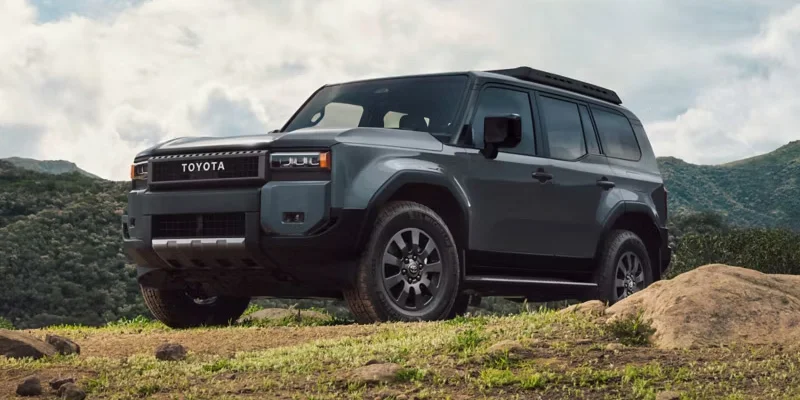
Toyota 4x4 High-Altitude & Winter Performance Guide for Lander & Fremont County
Key Takeaways for Wyoming Drivers Forced-Induction & Instant Electric Torque: Turbocharged 2.4L and twin-turbo 3.4L i-FORCE MAX hybrid powertrains eliminate the typical 16% to 28% atmospheric power loss experienced by naturally aspirated engines climbing through Lander (5,358 ft), South Pass (7,550 ft), and Togwotee Pass (9,658 ft). Specialized Drivetrain Traction: Full-Time 4WD provides seamless torque distribution across patchy black ice on Wyoming State Highway 789, while Part-Time 4WD with Active Traction Control (A-TRAC), Multi-Terrain Select (MTS), and Crawl Control deliver dedicated mechanical lockup for backcountry powder in the Wind River Range. Comprehensive Regional Protection: Every new Toyota includes 2-year/25,000-mile factory ToyotaCare maintenance, while qualifying pre-owned vehicles purchased at Fremont Toyota Lander receive 1-year Fremont Care coverage featuring two complimentary oil changes and tire rotations. Navigating the Wind River Basin and surrounding mountain passes demands vehicles engineered to handle dramatic elevation changes and extreme Rocky Mountain winter storms. From the high plains of Lander to the steep ascents of South Pass and Togwotee Pass, local drivers require dependable four-wheel-drive traction, cold-weather powertrain reliability, and responsive low-end torque. This engineering guide details how modern Toyota 4x4 systems and i-FORCE MAX hybrid powertrains conquer Fremont County's most challenging high-altitude terrain. High-Altitude Engine Performance: Overcoming Thin Air in the Wind River Basin Toyota i-FORCE and i-FORCE MAX hybrid powertrains maintain sea-level power output across high-altitude Wyoming mountain passes by utilizing variable-geometry turbochargers and electric motor generators that deliver instant torque independent of atmospheric oxygen levels. Driving in Central Wyoming presents severe barometric challenges that standard powertrains struggle to overcome. The city of Lander rests at an elevation of 5,358 feet above sea level. When drivers travel south on Highway 287 across South Pass, elevations exceed 7,550 feet; traveling northwest toward Dubois and Grand Teton National Park pushes vehicles over Togwotee Pass at 9,658 feet. At sea level, standard atmospheric pressure registers at 14.7 pounds per square inch (psi). By the time you reach Lander, atmospheric pressure drops to approximately 12.1 psi—a reduction of roughly 18% in ambient air density. At the crest of Togwotee Pass, air density plummets by nearly 30%. Elevation & Oxygen Density Metrics for Central Wyoming Sea Level (0 ft): 14.7 psi atmospheric pressure | 100% Oxygen Density | Baseline 100% Output Lander, WY (5,358 ft): 12.1 psi atmospheric pressure | ~82% Oxygen Density | Naturally Aspirated Loss: ~16% South Pass (7,550 ft): 11.1 psi atmospheric pressure | ~76% Oxygen Density | Naturally Aspirated Loss: ~23% Togwotee Pass (9,658 ft): 10.2 psi atmospheric pressure | ~70% Oxygen Density | Naturally Aspirated Loss: ~29% Naturally aspirated internal combustion engines depend entirely on atmospheric barometric pressure to push air into the cylinders. Automotive engineering establishes that a traditional, non-turbocharged engine loses roughly 3% of its rated horsepower and torque for every 1,000 feet of elevation gained. A conventional naturally aspirated 3.5L V6 engine rated at 278 horsepower at sea level generates only 233 horsepower when driving through downtown Lander. When hauling a livestock trailer, horse trailer, or heavy camper up South Pass, that same naturally aspirated truck is choked down to roughly 214 horsepower—a loss of over 64 horsepower simply due to thin mountain air. Toyota engineers resolved this high-altitude limitation through modern forced induction and hybridization. In the 2026 Toyota Tacoma, the standard i-FORCE 2.4L turbocharged four-cylinder engine employs a low-inertia twin-scroll turbocharger that forces compressed air directly into the combustion chambers. Because the turbocharger's wastegate electronically regulates boost pressure based on manifold absolute pressure rather than ambient air density, the engine simply spools to compensate for thinner air, maintaining its full 278 horsepower and 317 lb-ft of torque across Fremont County. Taking capability even further, the i-FORCE MAX hybrid system available in the Tacoma, 4Runner, Land Cruiser, and Tundra introduces an electric motor-generator positioned inline between the combustion engine and the automatic transmission. In the full-size 2026 Toyota Tundra, the 3.4L Twin-Turbo V6 i-FORCE MAX produces 437 horsepower and an immense 583 lb-ft of torque at an accessible 2,400 RPM. While the twin turbochargers compress mountain air to preserve combustion strength, the 288-volt nickel-metal hydride (Ni-MH) battery pack powers a 48-horsepower electric motor that produces 184 lb-ft of instantaneous torque from 0 RPM. Electric motors do not consume oxygen; their output is 100% immune to elevation changes. "Towing a tandem-axle trailer up Beaver Rim or over South Pass with an older naturally aspirated truck used to mean watching your transmission hunt between gears while your engine screamed at 5,000 RPM just to hold 50 miles per hour. With the i-FORCE MAX hybrid system in the new Tundra and Tacoma, the electric motor fills the low-end torque gap instantly before the turbos reach full boost. You get immediate throttle response off the line, effortless passing power at 8,000 feet, and a powertrain that doesn't feel starved for air when the grade steepens." — John Doe, Master Certified Service Director at Fremont Toyota Lander Furthermore, high-altitude mountain travel requires competent downhill speed control. When descending steep grades such as Sinks Canyon Road or Highway 287 into Lander, Toyota's i-FORCE MAX hybrid models utilize regenerative braking. As the vehicle coasts or brakes downhill, the electric motor-generator reverses polarity, capturing kinetic energy to recharge the hybrid battery pack while providing natural mechanical resistance that reduces brake rotor heat and pad wear. Toyota 4x4 & Traction Systems in Wyoming Winters: Mechanical Control vs. Deep Snow Toyota four-wheel-drive systems deliver dependable cold-weather traction by pairing rugged mechanical transfer cases and locking differentials with intelligent electronic traction management algorithms engineered to master frozen, low-friction terrain. Wyoming winters in Fremont County are notoriously unpredictable. Commuting along Wyoming State Highway 789 between Riverton and Lander often exposes drivers to rapid transitions from bare asphalt to hard-packed snow, black ice on bridge decks, and blowing ground blizzards across open plains. Navigating these varied hazards requires selecting the correct four-wheel-drive architecture for your specific winter driving demands. Part-Time 4WD with Active Traction Control (A-TRAC) Standard on core configurations of the Toyota Tacoma, 4Runner, and Tundra, Part-Time 4WD utilizes a durable two-speed mechanical transfer case. In two-wheel drive (2WD), all engine torque is routed to the rear wheels for dry highway efficiency. When shifting into Four-Wheel Drive High (4H), the transfer case mechanically locks the front and rear driveshafts together, enforcing an unyielding 50:50 torque split between front and rear axles. On snow-packed roads or unplowed municipal streets in Lander, 4H guarantees that both axles pull the vehicle forward simultaneously. In severe, off-camber snowpack or deep drifts around the foothills of the Wind River Range, drivers can engage Four-Wheel Drive Low (4L) alongside Toyota's proprietary Active Traction Control (A-TRAC). When one wheel encounters slick ice and begins spinning freely, A-TRAC utilizes individual hydraulic wheel speed sensors to pulse the anti-lock brake caliper on that slipping wheel. This hydraulic braking instantly forces drive torque across the open differential to the opposing tire that maintains surface grip, delivering the traction benefits of locking differentials while preserving full steering authority. Full-Time 4WD with Locking Center Differential Available on the 2026 Toyota Land Cruiser, Toyota Sequoia, and select high-trim 4Runner models, Full-Time 4WD represents the premier drivetrain for mixed-surface winter driving. Rather than rigidly locking front and rear driveshafts, Full-Time 4WD routes power through a Torsen limited-slip center differential with an integrated differential lock. Under normal conditions, the Torsen center unit automatically biases torque 40% to the front axle and 60% to the rear axle. When driving on Wyoming Highway 789 during a winter squall—where dry stretches of pavement suddenly alternate with slick ice patches—Full-Time 4WD remains continuously engaged without causing drivetrain binding, wheel chatter, or steering resistance on bare pavement. If the rear tires hit black ice, the Torsen differential instantly shifts up to 70% of driving torque to the front wheels. When extreme winter blizzards drift snow across rural county roads, the driver can push a single switch to electronically lock the center differential, establishing an uncompromising 50:50 mechanical axle lock. Multi-Terrain Select (MTS) and Crawl Control Modern Toyota 4x4 models feature Multi-Terrain Select, an electronic control system that alters engine throttle sensitivity, hydraulic braking force, and traction control intervention thresholds across customizable driving modes, including "Deep Snow," "Mud," "Sand," and "Dirt." In standard driving modes, vehicle stability systems immediately cut engine throttle the moment wheelspin is detected, which can bog down a vehicle and strand it in heavy, wet snow. Engaging "Deep Snow" mode instructs the engine control computer to maintain engine momentum while allowing controlled wheel slippage to fling packed snow from the tire sipes and bite into the road surface beneath. For extreme backcountry rescue situations or deep snowdrifts around Sinks Canyon State Park, Toyota's Crawl Control acts as an ultra-low-speed off-road cruise control. Operating in 4L, Crawl Control manages throttle and braking automatically across five driver-selected speed settings. Drivers can take their feet off the pedals and focus entirely on steering through deep powder, while the system meters power to individual wheels to pull the vehicle out of deep ruts without digging the chassis into the snowbank. Model Comparison: Toyota High-Altitude & Winter Capability Matrix Toyota's truck and SUV lineup provides distinct mechanical platforms tailored to different high-altitude towing requirements, payload limits, and winter driving conditions throughout Wyoming. The following comparison illustrates how core 2026 Toyota models perform when operating at elevated altitudes and navigating severe winter climates across the Rocky Mountain West: Model Engine Architecture Elevation Power Retention Max Towing Capacity AWD / 4WD Drivetrain 2026 Toyota Tacoma 2.4L Turbo i-FORCE / i-FORCE MAX Hybrid Full boost maintained to 10,000+ ft via turbo wastegate & 48-hp electric motor assist. Up to 6,500 lbs Part-Time 4WD with 2-Speed Transfer Case & A-TRAC; available rear locking differential. 2026 Toyota Tundra 3.4L Twin-Turbo V6 i-FORCE MAX Hybrid 583 lb-ft torque at 2,400 RPM; dual intercoolers & hybrid drive prevent high-pass power sag. Up to 12,000 lbs Part-Time 4WD with electronic shift-on-the-fly transfer case and Multi-Terrain Select. 2026 Toyota 4Runner 2.4L Turbo i-FORCE / i-FORCE MAX Hybrid 465 lb-ft instant torque in hybrid trim; zero altitude sluggishness on mountain ascents. Up to 6,000 lbs Part-Time 4WD or Full-Time 4WD with center lock, Crawl Control, and Multi-Terrain Select. 2026 Toyota Land Cruiser 2.4L Turbo i-FORCE MAX Hybrid Integrated hybrid powertrain delivers constant 326 hp regardless of mountain elevation. Up to 6,000 lbs Standard Full-Time 4WD with Torsen center lock and push-button electronic rear locker. Tacoma for Ranching & Forest Service Trails: With its high approach angles, multi-link rear suspension, and compact track width, the 2026 Tacoma navigates narrow timber roads and snowed-in pasture gates outside Lander with nimble composure. Tundra for Heavy Mountain Towing: When pulling horse trailers or multi-axle snowmobile rigs up Highway 287 toward South Pass, the Tundra's fully boxed steel frame, large rear ring gears, and 583 lb-ft of hybrid torque provide stable towing without white-knuckle strain. 4Runner for Winter Utility: Built on Toyota's rugged TNGA-F truck platform, the 4Runner balances daily winter commutes along WY-789 with legendary durability for winter excursions into Shoshone National Forest. Land Cruiser for Uncompromising Winter Luxury: Featuring standard full-time 4WD, heritage body styling, and modern hybrid efficiency, the Land Cruiser offers the most seamless transition between freezing highway slush and unplowed mountain passes. Local Service & Winterization at Fremont Toyota Lander: Protecting Your Investment Comprehensive winterization at Fremont Toyota Lander safeguards engine reliability and chassis integrity against -20°F sub-zero cold snaps, magnesium chloride road spray, and abrasive gravel wear common throughout Central Wyoming. Winter vehicle preparation in Fremont County demands technical precision that goes far beyond a routine car wash. When overnight winter temperatures plunge to -20°F in Lander, Riverton, and Dubois, engine motor oil thickens significantly. Standard conventional oil or heavy-viscosity oils turn into thick sludge at these temperatures, starving camshaft journals, hydraulic lifters, and turbocharger bearings of oil pressure during cold starts. Our service facility utilizes Genuine Toyota 0W-20 Full Synthetic Motor Oil. The "0W" winter rating guarantees that the lubricant retains low viscosity and flows immediately upon key turn at temperatures as low as -35°F. Rapid oil circulation prevents catastrophic cold-start metal-on-metal friction within modern turbocharger bearings and variable valve timing mechanisms. Critical Winterization Inspection Points 1. Cold-Cranking Amp (CCA) Battery Testing: Vehicle batteries lose up to 50% of their chemical cranking power when ambient temperatures reach 0°F, while thick engine oil simultaneously doubles the resistance required to turn the starter. We test battery reserve capacity and install Genuine Toyota True-2 and AGM batteries engineered with elevated Cold Cranking Amps to guarantee ignition on the coldest Wyoming mornings. 2. Coolant System Refractometer Testing: Diluted or aged engine coolant can freeze inside radiator cores, cracking heater cores and engine blocks. Our factory-certified technicians test your coolant's ethylene glycol concentration to verify sub-zero freeze protection down to -34°F or lower. 3. Chassis & Suspension Pre-Winter Torque Checks: Washboard gravel roads along the Wind River Range loosen sway bar end links, ball joints, and tie rod sleeves. We inspect suspension components and align steering geometry to prevent erratic winter vehicle wander. 4. Winter Wiper Blades & Heavy-Duty Washer Fluid: Standard summer wiper blades freeze into rigid arcs that fail to clear windshield glass. We install heavy-duty, silicone-encased winter wiper blades paired with freeze-resistant washer fluid rated to -20°F to combat road grime and salt residue thrown by traffic on WY-789. Local Warranty Protection: ToyotaCare vs. Fremont Care Keeping your vehicle maintained to factory standards is seamless whether you purchase a brand-new vehicle or a reliable pre-owned truck from our Lander lot: Factory ToyotaCare (New Vehicles): Every new Toyota purchased at Fremont Toyota Lander comes standard with complimentary ToyotaCare. This factory coverage spans 2 Years or 25,000 Miles (whichever occurs first) and covers factory-scheduled maintenance, including oil and filter changes, tire rotations, multi-point vehicle inspections, fluid adjustments, and 24-hour roadside assistance. Fremont Care Protection (Pre-Owned Vehicles): We extend peace of mind to our pre-owned truck and SUV buyers through Fremont Care. Included for 1 Year on qualifying pre-owned vehicles, Fremont Care provides two complimentary oil changes and two tire rotations during your first year of ownership. Whether you reside in Lander, commute from Riverton, or travel in from Fort Washakie, our factory-trained and certified Toyota technicians utilize specialized diagnostic scanners, alignment racks, and OEM parts engineered exclusively for your vehicle. Frequently Asked Questions Do Toyota hybrid batteries work well in freezing Wyoming winters? Toyota hybrid batteries perform reliably in freezing temperatures because integrated battery thermal management systems actively monitor and regulate cell temperatures. While extreme cold temporarily reduces regenerative braking efficiency during initial startup, normal hybrid assist and all-wheel-drive traction function consistently once the cabin warms. What is the difference between ToyotaCare and Fremont Care? ToyotaCare is a factory maintenance plan providing two years or 25,000 miles of complimentary scheduled maintenance and roadside assistance on new Toyotas. Fremont Care is our dealership coverage providing one year of protection—including two oil changes and two tire rotations—on qualifying pre-owned vehicles. Should I put winter tires on my Toyota 4Runner if it has 4WD? Yes, you should install dedicated winter tires on a four-wheel-drive 4Runner. While 4WD mechanics successfully provide forward propulsion through snow, four-wheel drive cannot assist in cornering or stopping; dedicated winter tires provide the specialized rubber siping required to brake and steer safely on ice. Where can I get factory-certified Toyota service near Riverton or Fort Washakie? You can get factory-certified Toyota service at Fremont Toyota Lander, located at 103 Fremont Way in Lander, Wyoming. Serving Lander, Riverton, Fort Washakie, and Dubois, our certified service department provides factory-trained Toyota technicians, genuine OEM parts, and complete winterization services. Visit Fremont Toyota Lander for Your Winter Performance Needs Wyoming winters and high-altitude mountain highways require vehicles engineered to endure the most demanding conditions in North America. From the high-boost performance of the i-FORCE MAX hybrid lineup to complete cold-weather maintenance at our certified service facility, Fremont Toyota Lander is here to keep you safe and confident across Fremont County. Schedule Winter Service Online » Call Service: (307) 332-3386 View New Toyota 4x4 Inventory »